Where the City of Dreams Does Its Best Business
Milken Global Conference 2026
Los Angeles has always understood something that the rest of the business world is only beginning to fully appreciate: that the most consequential things happen when people are in the same room.
It is a city built on storytelling, on the belief that a shared experience can move people in ways that a broadcast never quite manages. For one week each spring, it becomes the unlikely capital of global finance, as the Milken Global Conference draws together the leaders of alternative asset management, private markets, and institutional capital from across the world. The Beverly Hilton fills. The Waldorf Astoria across the street does too. And then the real conversations begin, in hotel suites and private dining rooms scattered across the city, sometimes miles from the conference itself.
Sunday Night: Creativity, Scale, and the Stakes of Getting It Right
Before the conference officially opened its doors, Axios set the intellectual tone for the week with its BFD session at the Wheelhouse. Dan Primack sat down with Peter Chernin, and the conversation that followed had a resonance that carried well beyond the room.
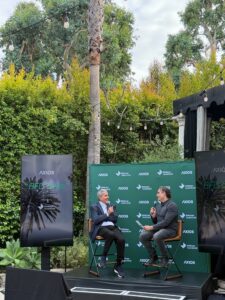
Chernin’s argument was direct: in an era when Netflix commands scale that the traditional studios simply cannot match, creativity becomes the decisive competitive variable. Scale can be built, replicated, even automated. But genuine creative vision, the kind that produces work which captures something true about the human experience, that remains stubbornly, beautifully difficult to manufacture.
For a room full of investors and dealmakers, it was a striking provocation. The alternative asset world spends considerable energy analyzing scale, debating the advantages of size, and building platforms designed to maximize it. And yet here was one of Hollywood’s most respected figures suggesting that scale, uncoupled from creativity, is ultimately insufficient.
That tension, between the efficiency of scale and the irreplaceable value of originality, would surface again later in the week.
Monday Night: Scarcity, Ambition, and an Unlikely Party
The iConnections gathering at the Wheelhouse on Monday evening carried a different atmosphere entirely. Festive and deliberately unstructured, it was the kind of event that tends to produce the conversations that never quite make it onto any agenda.
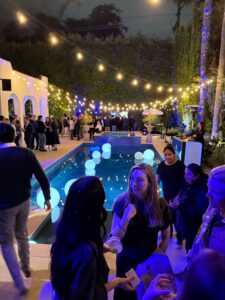
In one corner, a group was animatedly discussing the economics and ambition behind NBA expansion franchises, weighing the cultural weight of owning a team against the financial calculus of an asset class that rarely comes available. In another, the conversation had turned to collectibles, and to the quietly radical idea that in a world of digital abundance, scarcity has become one of the most compelling value propositions of all. When everything can be copied, what cannot be duplicated commands a premium.
It is the kind of wide-ranging, intellectually alive conversation that thrives in social settings and tends to die on video calls.
Tuesday Night: Dinner in the Hills, and a City in the Room
On Tuesday evening, Vested hosted a private dinner at L’Ermitage in Beverly Hills, gathering chief executives, founders, and senior executives from across the alternative asset space. The setting felt appropriate. Beverly Hills sits at the heart of a city that has spent a century understanding how to create things that endure.
Around the table, the conversation moved organically from the meetings people had taken during the week to something larger: the enduring importance of Milken as a convening force. These were executives who had traveled to Los Angeles not simply to sit in conference rooms, but to be in the same place as the people who matter most to their work. They spoke about the sessions that had inspired them and about the peers they had finally managed to see in person after months of emails and calendar holds.
The Chernin thread resurfaced here in an unexpected way. Several guests reflected on the tension between scale and creativity in their own businesses, which made a certain kind of sense. Los Angeles has always been the city that grapples with this question most honestly. How do you build something large enough to matter while keeping intact the creative spark that made it worth building in the first place? The alternative asset industry, as it scales toward new markets and broader investor bases, is asking exactly the same question.
The dinner also produced a recurring question that has begun to surface at gatherings like this one: which conferences are actually worth attending? Which ones have earned the loyalty of the people who shape their industries? The answer, when it came, was usually the same. The ones where the right people consistently show up, where presence signals something, and absence is noticed.
The Hotels Across the City
One of the quieter revelations of the week was the geography of it. The conference anchors itself at the Beverly Hilton and the Waldorf Astoria, but a remarkable number of the most productive meetings took place elsewhere entirely, in hotel lobbies and private rooms scattered across the broader city, some of them a considerable distance from the main crowd.
People were willing to travel for a meeting. They pulled up to hotels far from the conference corridor, sat down across from someone they had been trying to reach for months, and had a conversation that no video call would have quite replicated. A Zoom would have been faster. A Zoom would have been more efficient. A Zoom would have missed the point entirely.
There is something worth noting in that willingness to travel. In an industry that has access to every conceivable digital communication tool, and in a week already full of competing demands on everyone’s schedule, people were still choosing to get up and go somewhere.
What Los Angeles Understands
The city has always known that the work of building something meaningful, whether a film, a fund, or a long-term business relationship, requires a kind of sustained human attention that technology can support but not replace.
In a world where AI can deliver information instantly and analysis at scale, the competitive advantage shifts toward something older and more difficult: genuine connection, the kind that is built slowly and tested over time. The executives at our dinner, the investors at the Wheelhouse, the dealmakers taking meetings in hotels across the city, they were all making the same bet. That presence still matters. That the room still does something the screen cannot.
Los Angeles, which has staked its identity for a century on the power of a shared experience, would agree.